Espresso vs. Cappuccino: When Italians Actually Drink Each
You order a cappuccino at eight in the morning in a bar in Bologna and nobody blinks. You order the same thing at four in the afternoon at the same counter and the barista may pause, just for half a second, before reaching for the cup. That pause is the whole subject. Espresso and cappuccino are not two sizes of the same idea in Italy; they belong to different hours, different rituals, and slightly different vocabulary when you order. Getting both right is mostly a matter of timing and a handful of words.
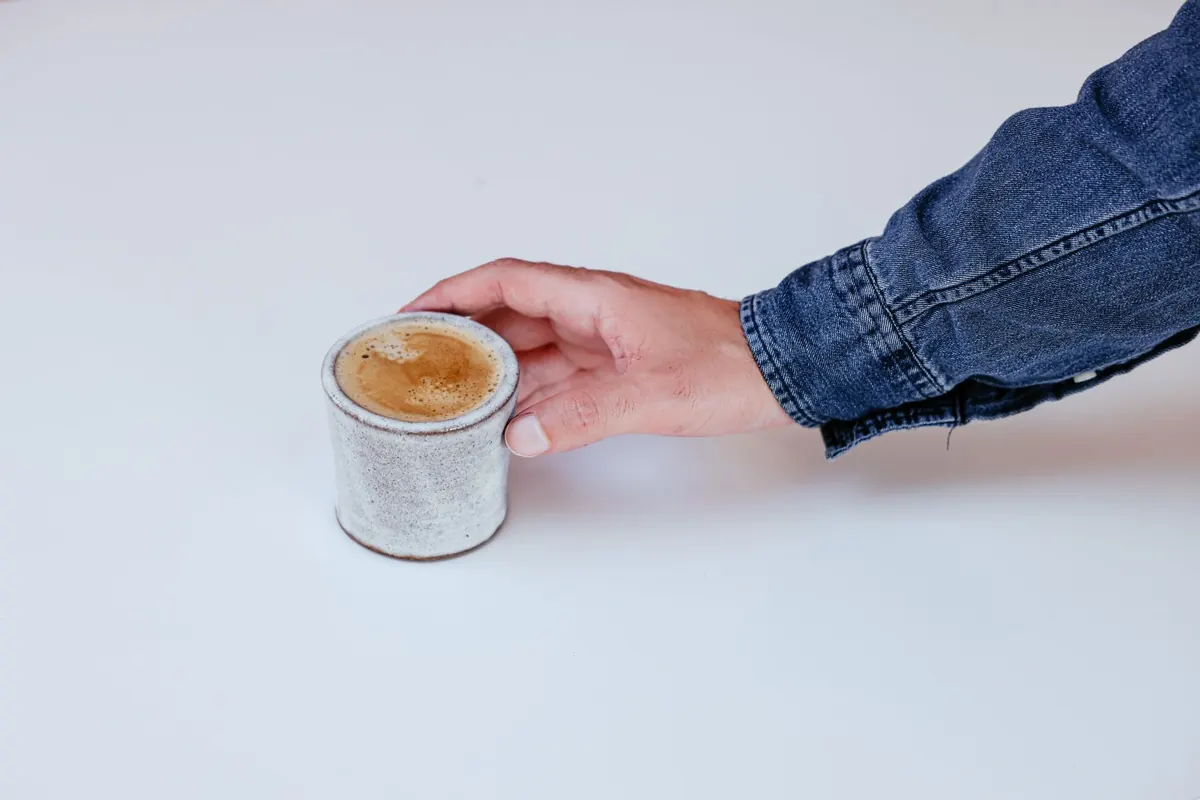
In Italy, “un caffè” means espresso. Not filter coffee, not an Americano, not a long black — an espresso, roughly 25–30ml, in a small cup that has usually been warmed. You drink it in two or three sips, standing, and you are finished in under two minutes. That is not rudeness or haste. It is the shape of the drink.
A cappuccino is a different animal: the same espresso, plus hot milk and a thick cap of foam, served in a wide cup of roughly 150–180ml. It takes longer to drink, it fills you up more, and it comes with an implicit side order of something to eat — a cornetto, a piece of focaccia, a brioche. Nobody looks at you strangely for drinking one on its own, but it is a breakfast drink the way toast is a breakfast food.
The difference is not strength. A cappuccino is not “weaker” in any meaningful sense; it is milkier and bigger. What separates the two in Italian daily life is volume and timing.
Ask an Italian why they don't drink cappuccino after lunch and you'll usually hear something like “milk is heavy” or “it sits in your stomach”. Treat that as a description of a habit rather than nutrition advice — it is a cultural preference with a digestive logic attached, not a rule anyone has verified. What matters practically is that the preference is real and widely shared.
The unwritten cut-off lands somewhere around mid-morning, often quoted as eleven o'clock, though the more useful version is simply “before lunch”. After a full meal, and especially at dinner, an espresso is the expected close. A cappuccino at that hour reads as out of place, a bit like ordering porridge at a barbecue.
The custom covers milk drinks generally: caffellatte, latte macchiato and cappuccino all sit in the morning slot. A caffè macchiato — an espresso “stained” with a drop of milk — falls outside the rule entirely, which is why it is the safe order at four in the afternoon or after dinner. If you want a little milk later in the day, that is the move.
Here is the rough rhythm you'll see in a bar in Rome, in Milan, or in a small town in Puglia. It is a habit rather than a law, but it is consistent enough to plan around.
None of this means a bar will refuse you. Bars sell coffee; if you ask, you'll get it. The point is that the timing carries meaning, and choosing the right drink at the right hour is one of the small ways a visitor gets treated like a regular.
Ordering for a group is straightforward: “Un caffè e un cappuccino” is a perfectly good request, and nobody expects you to explain who is having which.
A short glossary covers almost everything you'll need at the counter.
Photo: Cup of Couple / Pexels
Previous Post
How to Build a Beginner-Friendly Italian Antipasto Board
Next Post
How to Make Panzerotti at Home: A Step-by-Step Street Food Guide