Why Pasta Water Matters: An Explainer on Starch, Salt, and Sauce
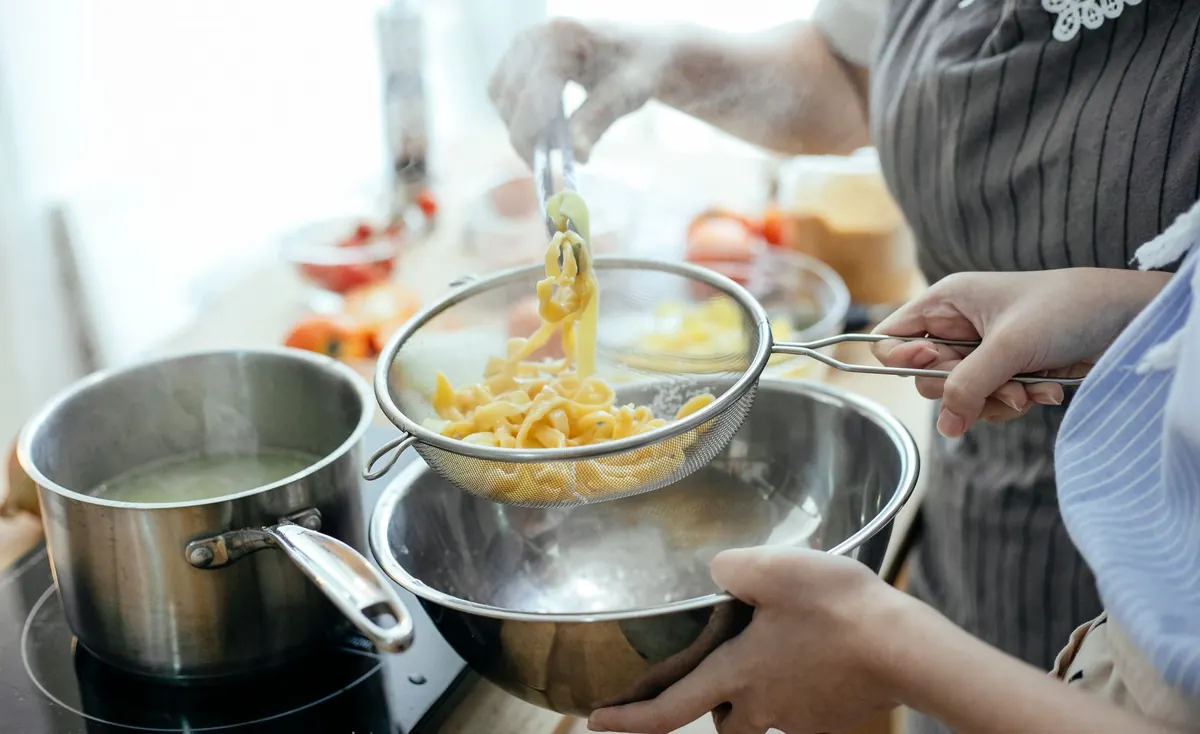
Somewhere between the rolling boil and the plated bowl, most cooks pour the most useful thing in the kitchen down the drain. Pasta water — cloudy, salty, faintly thickened — is the reason a restaurant sauce clings to every strand while a homemade one sometimes slides off in a puddle. It costs nothing, it is already hot, and it is already in your pot. You just have to remember to scoop it out.
Dried pasta is durum wheat semolina and water, pressed and dried hard. Drop it into boiling water and two things happen at once. The noodles hydrate and soften, and a thin layer of starch on their surface loosens and washes into the pot. Keep boiling and the water turns milky. That milkiness is the useful part.
Fresh pasta releases far more starch than dried, and egg pasta more still. Gluten-free pasta is its own case: those flours shed a lot of starch and a gummy texture with it, which is worth remembering later. The second ingredient is salt, which seasons the pasta itself and, by extension, the sauce you build around it.
Fat and water do not mix; you know this from every vinaigrette that separated on the counter. To hold them together you need a third party — something that likes both. In a pan of butter, olive oil, cheese and pasta water, that third party is gelatinised starch.
When starch granules swell in hot water, they thicken the liquid and coat the droplets of fat, helping them stay suspended instead of pooling at the edge of the pan. Cooks call the result an emulsion. You will recognise it as the moment a loose, greasy-looking mess suddenly turns silky and pale and starts to behave like sauce. The starch also does something more physical: it gives the sauce a little grip, so it hangs on to the rough surface of the pasta instead of running to the bottom of the bowl.
There is a practical consequence. A sauce made only with fat and cheese will tighten and split as it cools. The same sauce with a spoonful of starchy water in it holds for longer and reheats better. That is not magic, it is just chemistry you can stir.
Salting the water is the only chance you get to season the pasta itself. Sauce sits on the outside; salt in the cooking water works its way in. Under-salt the pot and no amount of cheese at the end quite fixes it.
The old instruction to make the water "as salty as the sea" is overkill. Aim for water that tastes seasoned the way a good broth does — noticeably salty, but not unpleasant to sip. Taste it. If the sauce already carries a lot of salt — Pecorino in a cacio e pepe, guanciale in a carbonara, anchovies, capers, olives — keep the pot on the lighter side, because the water you add at the end brings its salt with it.
Salt early enough that it dissolves, and skip the oil. Oil in the water does nothing for sticking and can leave a film that keeps sauce from gripping.
The technique is simple, but the sequence matters. This is the routine to follow:
A generous mug per pot of pasta is enough for most meals; a litre of the stuff is not a trophy. Keep it hot — cold water drops the temperature of the pan and encourages cheese to clump — and keep it covered so it does not reduce to a paste.
A small habit helps: put the mug or jug in the sink before you drain the pasta. You will see it, and you will fill it. If you are cooking two sauces or a big batch, save more than you think you need. Leftover pasta water freezes reasonably well and is handy for loosening soups, stews and reheated leftovers.
Beyond the obvious, it is the fix for a lot of small kitchen problems. Use it to:
There are moments to leave it alone. If the sauce is already rich and salty, extra water dilutes flavour while adding more salt; reduce it in a separate pan first, or use plain hot water instead. Gluten-free pasta water is extremely starchy and can turn a delicate sauce gluey, so start with half the amount you would normally use. And if you have cooked the pasta to mush, the water tastes of it — use it sparingly.
Some dishes do not want it at all: fried pasta, cold pasta salads where you want distinct grains, and anything where a thin, clean sauce is the whole point.
None of this requires new equipment. Keep a heatproof jug near the stove, salt the water properly, and scoop before you drain. The first time a sauce comes together glossy instead of greasy, the reason will be obvious, and the habit will stick.
Photo: Katerina Holmes / Pexels
Previous Post
How to Make Panzerotti at Home: A Step-by-Step Street Food Guide
Next Post
A Lemon Lover’s Local Guide to the Amalfi Coast: What to Taste and Buy